

Jake Minch, Live in Syracuse
By Lily Gallagher | January 27th, 2026
Walking into the song and dance on November 19 felt like stepping into a space designed for softness, sound, and shared emotion. My first impression was of a large, open room, with the bar immediately to the right and the stage set beyond the main social area at the back of the lounge-style space. The lighting was soft and glowy, the perfect balance of moody and fun. Some people were sitting on the ground, while others were standing around talking, dancing, and already enjoying the music playing through the speakers (multiple old 5 Seconds of Summer tracks).
The opener for Jake Minch was Daryl Rahn, an indie singer from Utica, New York. He came out on stage at 7:30, and his vibe gave off a cool confidence built through years of creativity and trust in his ability. He mentioned early on in his set that Jake Minch was not only a musical inspiration but his best friend.
Rahn’s setlist evoked the type of tragic beauty you only get from raw feeling, longing, and heartbreak.
He first performed “Nothing Ever Happens,”a slow, melodic song about how we really can never predict our own future no matter how hard we try. The lyric that stuck out to me the most was “I had it all in my head where I’d be at 25,” a beautifully written sentiment about how we can never truly know what the future has in store for us because it simply has not happened yet. It honestly eased my own anxieties about growing up and becoming a “real adult”. His voice was rich and smooth and melodic– I was honestly entranced from the first song.
Rahn also sang “Don’t Come Over,” with lines like “I just can't stand the thought of going back to where I was” and “Don’t come over so you don’t have to go.” To me, it felt like a song about going through the heartbreak of splitting with a partner. The longing and honest desire to see them is there, but so is the understanding of how bittersweet the ending always is and that, eventually, they will have to leave you. To me, it was similar to a Mac DeMarco type dramatic love song but more melancholic in tempo.
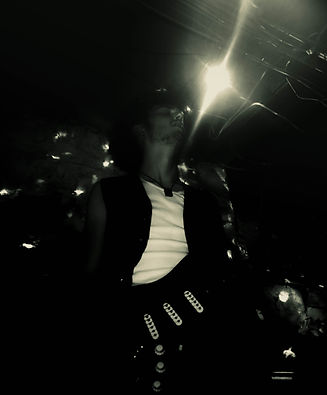
When Jake Minch took the stage at 8:30, the relatively small crowd sounded monstrous in comparison to its size. They all seemed like die-hard fans, and at the time I felt a little left out. I purposely did not listen to any of his songs on Spotify before coming to the concert because I wanted to hear how he sounded live. It only took one song to realize what the hype around Jake Minch and his sound was—the longing, the thoughtful, bittersweet lyrics about growing older and falling in love. They resonated with me on a deeper level, especially hearing them for the first time live.
My favorite song was "nostalgia act”. Minch’s voice is rich with deep emotion that once again made me reflect on my own childhood and personal life. I found myself basking slightly in the desperation and sadness of his music, because honestly that is just my taste, and what I thrive on hearing are deep, meaningful tracks that make you nostalgic for times past. Maybe that’s just my interpretation, but the line “Oh what a dangerous feeling it is to know what it’s like to really want something” hit me in a way I wasn’t expecting. It captured the exact emotion his whole set carried for me, the tension between longing for something deeply and fearing the vulnerability that comes with wanting anything that badly. It made the nostalgia and heaviness of the music feel even more personal, almost like he was articulating a feeling I’ve had but never fully put into words.
My second favorite song in Minch’s set is called “Handgun”. It is a slow, heartfelt song about childhood memories and yearning, capturing that bittersweet feeling of wanting to grow up while still being young. Lines like “Who gives a kid a handgun?” and “Who lets that kid fall in love?” really demonstrated the tension between innocence and experience, while “Learned the worst part of growing up is learning how young you are” perfectly conveys the realization that growing up doesn’t mean you suddenly have all the answers. The song lingers on that mix of wistfulness, desire, and the quiet ache of coming of age.
Overall, the night at The Song and Dance was an intimate and moving experience. Both Daryl Rahn and Jake Minch delivered performances full of raw emotion and thoughtful storytelling, leaving the crowd, myself included, feeling both reflective and deeply connected to the music. It was the kind of concert that stays with you long after the last song.
No Boys Allowed: The Tea App For Women is Taking Over College Campuses
By Sophia Burton | October 28th, 2025
A dating safety app created specially for women has gained recent popularity on college campuses. After watching his mother’s bad experiences with dating apps, Sean Cook decided to make Tea—an app that equips women with the tools they need to cultivate a safe dating environment (teaforwomen). Now, Tea has become one of the most talked about apps on college campuses—and the boys are not happy.
Women sign up for the app by entering their name, age and location, which helps them see posts about men in their area. The app verifies that all of its users are female by requiring users to take a live selfie instead of uploading a picture. Once they are in, women can anonymously make posts and comment on men in their area. Users upload a picture of the man and his first name (last names are not allowed) and either caption it with a warning about him or by asking other women to comment on whether or not he is a “good guy.” Other women can write comments or simply give the man a red or green flag to indicate whether or not they think he is worth dating. In addition to not posting last names, the rules also state that the post can not include contact information, personal data, social media handles, bullying or harmful content. The rules also mandate that users can not post men under the age of 18 and can not post women. Finally, and perhaps the most difficult rule to regulate is that all statements must be true. However, on isolated campus communities, it can be challenging not to let emotions impact the honesty of posts. Comments like “Cheater,” and “He has a gf but flirts with everyone,” can be helpful to a person who is considering starting a relationship with someone; however, these comments are only valuable if they are true. An anonymous student shared, “someone commented on a post of my boyfriend that said he was cheating but he wasn’t.” She followed up with the person who commented and confirmed that it was not true.
In addition to the posting function, the app offers several other important features that are likely not as relevant to college students. Tea provides various safety tools, “with features like Reverse Image Search to catch catfish, Phone Number Lookup to check for hidden marriages, and Background Checks to uncover criminal records, Tea ensures that women have the information they need before meeting someone new.” (teaforwomen). The app also features a chat section for women across the U.S. to discuss dating experiences and support each other. These safety and support features are extremely important, but college students are not focusing their attention on these features on the app. Instead, college students use the app as an anonymous gossip platform. Another anonymous student shared his stance, “I think the Tea app is being used in the wrong way, instead of helping women find men that are unsafe, it is instead antagonizing men and cyberbullying them. It is not a productive app for women on a college campus.”
Users who post truthful information, offer thoughtful advice, or support women in the chat section demonstrate the positive impacts of the app. On a college campus, Tea has the potential to foster an online community of women who look out for each other and support one another through the ups and downs of dating in college.
Padma, Claire Chicha, and the Art of Cool: The WERW Spring 25 Launch Party
By Lily Gallagher | May 2nd, 2025
As I entered the stage room at Schine Underground with my friend Jasmine, I was swept up by the moody lighting and creative energy that promised a night of music and art. Racks of vintage clothing were scattered throughout the back of the room, directly across from the stage, mimicking the aesthetic of a trendy thrift store and offering items for sale. I wandered through the maze of clothing racks, admiring each piece—everything from retro chunky sweaters to sheer Gucci shirts, each one unique and dripping with style.
Multiple tables lined the perimeter of the room, each one run by a different student organization offering free merch, stickers, and even temporary tattoos. One booth caught my eye right away: Students in University Union were promoting an immersive screening of Ratatouille, where the audience would eat each dish in sync with the film—every bite served in real time as it appeared on screen. I was intrigued by how it transformed a familiar movie into a multisensory experience, blending film and food in a way I’d never seen before.
I grabbed a snack from one of the tables and wandered through the space, quietly taking in the cool, artsy atmosphere. The room was still mostly empty—just press and booth organizers for now—so I had a rare moment to explore everything before the crowds arrived. Vintage clothing racks, zines, bold signage—it all felt curated, intentional, and exciting.
Purple and blue hues bounced off the walls, casting a calm glow over the room as the atmosphere softened. At first, the stage was alive with movement–employees adjusting microphones and arranging instruments– but now, it stood silent and still, awaiting the show. In an instant, the stage lights flashed on; and Padma, radiant and confident, took the stage with her band. from the dressing room, a door behind the stage. The room, previously filled with people casually browsing vintage clothes and chatting at booths, immediately shifted its energy as everyone turned their attention to the stage, eager to watch her performance.
Padma’s voice carried a clean, unique quality, while her bandmates—one on bass and the other on drums—added depth to the melancholic, indie-pop sound. She kicked off with a song
called “Gross” from her debut album, Daisy. The track had hints of Clairo’s style, though Padma’s sound stood apart with its slightly heavier bass, slower tempo, and a more subdued, calming mood. Padma’s style was effortlessly cool—she wore black jeans, classic loafers, and layered jewelry that caught the light just enough to make a statement without trying too hard.
Padma’s set continued with the second song off her EP, a track that paired airy, intimate vocals with a distinct indie-pop edge. It stood out with its deeper bass, slower tempo, and a more melancholic tone that settled into the room like a mood. She followed with a cover of Sabrina Carpenter’s “Taste,” transforming it into a much more upbeat version that still felt true to her own style.
One of the most striking moments came when she performed a song that brought her vocals to the forefront—“New City, Same Song,”. It depicts the awkward sting of running into an ex in a small Massachusetts suburb, which struck a personal chord for me. It beautifully captured the themes of emotional déjà vu—how certain memories and heartbreaks seem to follow you no matter where you go. This was the final song in her set and perfectly wrapped it up with a cinematic bang.
After Padma’s set, the stage was quickly cleared and reset for the night’s headliner: Spill Tab. A brief intermission followed, giving my friend and I a chance to step away from the stage barricade. We grabbed some water and wandered the space for a bit, stretching our legs and soaking in the energy from Padma’s performance. Moments later, the room darkened and lights flared as Claire Chicha, the Thai-born, French-American artist known as Spill Tab, took the stage with electrifying presence.
Known for her lo-fi vocals and alt-pop sound, Claire has carved out a distinct space in the indie music world—fusing dreamy textures with raw emotion in a way that feels both intimate and expansive.
I had never heard of Spill Tab before this performance, and to say I was blown away by her vocals and stage presence would be an understatement. The moment Claire and her band stepped on stage, the energy in the room shifted—she had an undeniable star quality that made it almost impossible to look away. Her two-toned hair, oversized red tee, and gray, menswear-inspired trousers created a look that was effortlessly cool. The outfit was tied together with a pair of brown, chunky Dr. Marten platforms that gave her presence even more edge.
The first song in her setlist, "Velcro," was an upbeat track that still carried a sense of emotional vulnerability. One of my favorite lyrics was, “I went and canceled all my plans for the evening / So unlike myself but I’m thinking / How to use my head without my mouth.” The song felt like a weightless journey, allowing me to both lose myself in its rhythm and reflect on a complicated relationship from my past.
My personal favorite song from the set, “Cotton Candy,” provided a striking contrast to “Velcro.” Slower and more sorrowful, it hit a specific chord with me that I didn’t expect. The hauntingly beautiful melody and lyrics reminded me of Phoebe Bridgers’ style—introspective and emotionally raw. However, Spill Tab’s raspy yet angelic vocals brought something unique to the track. The rawness in her voice added depth, giving the song an undeniable quality that transcended its influences. It was one of those moments where you could feel the music seep into your bones, leaving a lingering impact long after the song ended.
One unreleased song, set to appear on her album next month, stood out with a vibe completely different from “Cotton Candy.” While it was slow, this song’s sound was distinct and fresh, offering a deeper, more introspective side of Spill Tab’s artistry. One of Spill Tab’s greatest strengths, aside from her captivating style and vocals, is her ability to write both heartbreaking and relatable lyrics. She has a rare ability to weave raw, poetic lines that feel incredibly personal yet universally relatable. One of the most beautiful, and strikingly relatable, lines of the night came from this unreleased track: “If I cut you loose, it means I don’t get to fix you.” This line resonated with me deeply, as I’ve struggled in past relationships with the desire to “fix” the person I was with, even though I know it’s impossible to truly change someone if they aren’t willing to change themselves. On the flip side, cutting ties can feel equally difficult—you don’t want to lose the sense of power and control that comes with being in that relationship. The vulnerability in this line captured that inner conflict perfectly, and it left me reflecting long after the performance ended.
The night was a whirlwind of emotional highs and deep moments, with both Padma and Spill Tab delivering performances that were as captivating as they were raw. What stood out the most was not just their music, but the honesty that each artist brought to the stage. Padma’s melancholic indie-pop and Spill Tab’s lo-fi, emotionally charged alt-pop left me with a sense of connection to something deeper—whether it was the shared vulnerability in their lyrics or the way their music seemed to capture the essence of being a woman.
As the last notes of Spill Tab’s unreleased track faded into the night, I couldn’t help but feel thankful for the opportunity to experience such a powerful night of live music. It wasn’t just a concert; it was an immersion into the inner worlds of two incredible artists, and I walked away feeling inspired, reflective, and eager to see where their careers would take them next.
Danceworks Dreamscapes: How Dance is Shaping the Futures of SU Students | By Lauren Ervin March 12th, 2025

For many highschoolers looking towards a future in college and beyond, the thought of departing from beloved hobbies can be the most difficult to handle. Here at Syracuse University, student organization DanceWorks allows dancers to carry on their passion through college. Each year, members spend months cultivating their talents to create a showcase of fully student-choreographed dances. This year's showcase, DanceWorks Dreamscapes, encapsulated every ounce of talent and effort that went into creating the show. From tap, to hip-hop, and jazz, dancers demonstrated the very best of what they had to offer.
Jaden Haddad, a senior choreographer for DanceWorks, took her final moments on stage as an opportunity to acknowledge the person who “has actually done anything to make sure [she’s] happy”, her mom. “This was the craziest bit I’ve ever pulled off in my life,” Haddad describes the element of surprise for her piece titled, My Future. As a gesture of immense gratitude for her mothers’s support throughout her career as a dancer, Haddad devised the ultimate “thank you” to her Mom during this year’s showcase. Haddad kept her choreography and dance a secret starting in the Summer of 2024, even noting, “My mom is also like a 16-year-old girl, and I knew she would be looking at the DanceWorks Instagram.” There was no evidence to Hadad's choreographing efforts, “no mention, no word of this dance,” anywhere.
It wasn’t until show day, when Haddad’s choreographer video appeared on screen for the sold-out Friday audience, that her mom got to reap the ultimate reward. Years of traveling for competitions, mending costumes, and boundless support all convened for Haddad’s final DanceWorks performance, My Future.
It was one of the more outstanding, emotional pieces in the showcase, Haddad's number represents the future she has envisioned for herself. Haddad, a Psychology major and Chemistry minor on the pre-med track, plans on applying to medical school post-grad. The piece is an ode to Haddad’s journey of self discovery through dance, and the future she will continue to build for herself. Outfitted in long flowing skirts, Haddad and her dancers were “expressive of the good things to come.” The contemporary piece, set to “my future” by Billie Eilish, was Haddad’s first time choreographing alone. Everything down to the lighting on stage is handcrafted by DanceWorks choreographers. “With lighting, costumes, and everyone actually doing it full out, that’s really when it came together,” Haddad mentions. She continues, “I have always believed in working hard in the studio, but at the same time you need an audience, you need the adrenaline … that is exactly what happened”.
DanceWorks is Syracuse University’s largest student-run dance organization, and one that defines so much of what its members gain from the college experience. Haddad describes meeting some of her closest friends and role models through the organization, saying, “the people make the place, genuinely.” She describes the atmosphere of the organization as different from competitive dancing because there is, “no competition, it's just all of us doing what we love. Especially because so many of us thought that we would never dance again.”
As Haddad prepares for her next chapter, she and the 34 seniors leave behind a passionate, and dedicated community of dancers at SU. Haddad says, “I am so sad to leave it.” As the final bows were taken on Saturday night’s performance of Danceworks Dreamscapes, it was boundlessly evident that the organization not only preserves the art of dance, but also the dreams of its members, who they are and who they will become.
Dunting, Pinching, and Glazing: Why Are Ceramics So Horny?
By Riga Czarkowski | March 2nd 2025

Art by Sarah Lucas
The art of pottery has been practiced since before the Neolithic Period, which dates as far back as 29,000 BCE. While it is an art modernly practiced to create vessels for liquids, stews, and plants, its versatility expands into much more sensual genres. After thousands of years of sculpting, pottery has evolved into one of the most intimate and physically engaging art forms.
From porcelain to ceramic to good old earthenware clay, different textures, thicknesses, and designs can be combined with glazes galore to create anything the mind desires. The varieties and possibilities of pottery are endless. Ceramics hold not only one of the earliest credits to civilized living but also contributed largely to the societal discovery and normalization of self-pleasure, with archaeologists discovering hand-crafted penetration toys dating back to 18th-century Poland and much earlier during the primes of the Greek, Japanese, Roman, and Chinese empires.
Primordial cultures like the aforementioned often linked the symbolism of creating with clay to the creation of life. Could it be that the earth from which clay is harvested is linked to the life and death of a human being? There may be some truth in this ancient correlation. Regardless, the similarities between the creation of life and the creation of art are not uncanny. Many varieties of ethnic groups practiced pottery ritualistically, often correlating it to fertility and long-lasting love.
While ancient practices ritualized pottery, modern artists continue to explore these themes in new and provocative ways, sometimes manifesting as couples’ workshops, self-pleasure practices, and even pornographic media-based ceramics. Texture and touch play a crucial role in the potters’ experience, especially surrounding the conversation of intimacy. Arguably, pottery is inherently sensual, not just in its occasional erotic end-product but in the intimacy with which it is created--the wetness of the clay, the feel of gentle pressure on a smooth, moldable surface… You get the idea. Ceramic artists are among those who have brought content creation to an entirely new level. The sensuality of such a physical art form has led to this constantly growing niche in modern art, where ceramicists craft both functional and sculptural pieces that embrace intimacy, desire, and, sometimes, bodily pleasure.
Modern erotic pottery spans from creators sculpting intimate embraces or body parts to creating seductive content at the wheel. Sarah Lucas, Nebojsa Surlan, and Bohdan Bilinchuck are just a few examples of extremely talented sculptors and clay workers who have showcased their erotic ceramic art, proving that pottery continues not just to shape vessels but the conversation around intimacy itself. From hundred-thousand-year-old jade dildos to Lucas’s provocative yet humorous body-inspired sculptures to Surlan’s surreal and sensual pieces, pottery always has and will continue to push the boundaries of form and function, proving that clay is just as messy, moldable, and imperfect as intimacy itself.
From Avant-Garde to Everyday: The Influence of Modernism and Postmodernism on 21st-Century Fashion
by Brielle Brzytwa | February 21st, 2025

Fashion has always been a reflection of cultural movements, and few artistic philosophies have shaped the industry as profoundly as modernism and postmodernism. From the structured minimalism of modernist design to the eclectic irony of postmodern aesthetics, the evolution of these artistic movements can be traced directly to the clothes we wear today. But how did this avant-garde experimentation transition into everyday style? And how do modernism and postmodernism continue to influence contemporary fashion in the 21st century?
The Pursuit of Purity in Design
Modernism, which emerged in the early 20th century, was rooted in principles of function, simplicity, and an outright rejection of excess frill. The mantra "form follows function" defined the movement, as it favored clean lines, geometric silhouettes, and technical innovation over ornamentation. Designers like Coco Chanel, with her emphasis on sleek, wearable garments, and the Bauhaus School, which advocated for the merging of art and utility, set the foundation for a new approach to fashion; more specifically, one that prioritized practicality and timelessness.
Today, modernist influences can be seen in the rise of quiet luxury and minimalist dressing. Brands like The Row, Jil Sander, and Phoebe Philo’s tenure at Céline embody the modernist ethos with their streamlined silhouettes, neutral color palettes, and impeccable tailoring. The appeal of modernism in contemporary fashion is clear: it offers a sense of refinement and longevity in a world that has been oversaturated with quickly fleeting trends.
The Rebellion Against Order
If modernism sought purity, postmodernism reveled in chaos. Postmodernism emerged in the late 20th century as a reaction to the rigidity of modernist ideals. Postmodern fashion has been known to embrace playfulness, deconstruction, and pastiche. Designers like Vivienne Westwood, Jean-Paul Gaultier, and Rei Kawakubo (of Comme des Garçons) shattered conventional notions of beauty by mixing high and low culture, historic references, and ironic reinterpretations of traditional garments.
This rejection of singular narratives is alive and well in today’s fashion landscape. The rise of logomania, maximalist styling, and eclectic layering, which have been championed by brands like Gucci under Alessandro Michele and Balenciaga under Demna, are direct echoes of postmodernist aesthetics. Streetwear, too, thrives on postmodern principles by blurring the boundaries between luxury and casual wear through collaborations, ironic graphics, and unexpected material pairings.
Where Modernism Meets Postmodernism
What makes contemporary fashion so dynamic is its ability to seamlessly blend modernist and postmodernist ideals. Designers are currently embracing both restraint and rebellion in creating wardrobes that are as functional as they are expressive. Brands like Prada and Bottega Veneta balance modernist precision with postmodern subversion, which then offers us clothes that are both structured and playful. Even the way we consume fashion today, through digital media, curated aesthetics, and nostalgia-driven revivals, reflects a postmodernist approach to storytelling.
Ultimately, the influence of modernism and postmodernism on 21st-century fashion reveals that style is no longer being dictated by a singular philosophy. Instead, it thrives on contrast and more importantly, allowing individuals to define their own aesthetic narratives. Whether through the timeless minimalism of a well-tailored coat or the rebellious layering of clashing prints, the legacy of these movements ensures that fashion remains, at its core, an ever-evolving form of cultural expression.
Murder, Music, and Mastery: Why The Killer Is a Modern Classic
By Riga Czarkowski


“Stick to your plan. Anticipate, don’t improvise. Trust no one. Never yield an advantage. Fight only the battle you’re paid to fight.” This chilling mantra is repeated over the taut and immersive 118 minutes of The Killer. Directed by a master of modern psychological thrillers, David Fincher, this 2023 film stands out as one of the most exceptional modern crime features circulating as of late. If it’s not already on your watchlist, allow the epic soundtrack, impressive production, and macabre intensity to convince you otherwise.
The Killer follows the final mission of a soon-to-retire hitman played with precision by Michael Fassbender. His sociopathic inner monologue, while he goes about his daily formalities, gives the audience a rare and unsettling glimpse into the psyche of a professional assassin. After the main character’s meticulously planned mission doesn’t quite go as intended, he goes against his etiquette to pursue yet another operation. This character study humanizes a man with such a soulless job by introducing other important life themes like family, loyalty, negotiation, and what it takes to maintain a veneer of normalcy in a profession so inherently detached from humanity. The balance between the protagonist’s calculated logic and glimpses of vulnerability compels the viewer into a psychological and philosophical study as much as a crime thriller.
If you’re a fan of the Smiths, you are certainly in for a treat. The Killer features a soundtrack almost entirely composed of classic tunes by the 1980s band The Smiths. Had I not watched this with subtitles, my appreciation for the consistent needle drops would have been nearly nonexistent. The specificity with which the production team wove in titles and lyrics pertaining almost exactly to the events throughout the storyline is incredibly articulated and beautiful. The fabric of the film is stitched with The Smiths’ melancholic melodies, which perfectly complement the tension or irony of the scenes. Who would have thought such wistful indie rock would pair so well with such a gruesome lifestyle?
While the pacing does take some time before the action sets in, it is far from mundane. There is an emphasis on the brutal details that can be encountered during altercations, such as the ones that the protagonist experiences. Fincher’s signature attention to detail shines through during one of the most epic fight scenes I’ve ever seen, which takes place during an encounter along the protagonists’ impromptu mission. The pre-established understanding of the main characters’ insights combined with the exceptional camerawork help create the perfect intensity for the scene, truly leaving you on the edge of your seat.
Other incredible (and often disturbing) productions by Fincher include The Girl With The Dragon Tattoo, Zodiac, Fight Club, and Se7en. I find it striking how creative (and disturbed) Fincher is… and how much he loves using Brad Pitt as his lead. Fincher is no stranger to themes that explore the darker corners of the human experience, like impulse, primal fears and desires, corruption, and crime, with The Killer conforming to many of these motifs. It could be said that Fincher created the personality of the protagonist to reflect some of his own quirks, such as his obsession with perfection and likeability to his work, as if one mistake may cripple the trajectory of his life…
Fan reviews imply that Fincher’s most recent film, The Killer, is a sort of mockery of himself and his achievements as a director, and that it is bare-boned and ridiculous compared to some of his more psychologically vexing productions. While bits and pieces of this may have some grounds, Fincher truly reigned in some serious cinematic skill for his first film since 2020. Through his use of killer tunes, classically stunning cinematography, and true earnestness, Fincher created a modern crime that evokes much more emotion and relatability than any film like it.
Watch The Killer (2023) here:
Love Songs: The Most Classical Way of Saying
“I Love You”
By Charlotte DuBay |
January 4th, 2025


Often referred to as “the universal language”, music has always been a vital way for human beings to confess their feelings. Over time, artists have continuously used their songs to communicate deeper meaning. Love songs are no exception. In fact, love is consistently looked upon as one of the most prominent themes in music. Ballads, raps, and hymns alike often share this similar theme, despite the differences in production styles.
“Unforgettable” by Nat King Cole is a perfect testament to this statement. Released in October of 1951, the song explores the feeling Cole has when he looks into the eyes of his lover, who is, in his terms, simply unforgettable.
“That’s why darling, it’s incredible
That someone so unforgettable
Thinks that I am unforgettable, too”
Cole expertly pairs this sentiment with a beautiful orchestral background in order to communicate his true feelings: how lovely is it to love someone so special, and furthermore, this love be reciprocated.
Another example of this message lies within the lyrics of “LOVE. FEAT. ZACARI.,” a song released by Kendrick Lamar in 2017. Although these songs may reside on opposite ends of the musical spectrum, they both possess the same, prominent theme: love.
“If I minimized my net worth, would you still love me?
Keep it a hundred, I’d rather you trust me than to love me
Keep it a whole hund’, don’t got you I got nothing”
In this song, Kendrick Lamar explores the possibilities as to why his lover is with him. He acknowledges the presence of his wealth as a factor, yet ultimately reiterates this same theme: with the presence of true love in his life, trivial things such as wealth don’t matter. Without this love, he would possess nothing valuable.
However, the simple use of the word “love” to describe millions of songs over time is clearly too broad a statement. In reality, love songs explore the depth and complexities of human relationships, oftentimes shining light on the not-so-lovely parts.
“I fucking hate you, but I love you
I’m bad at keeping my emotions bubbled
You’re good at being perfect
We’re good at being troubled”
In his song “IFHY (feat. Pharrell),” Tyler, The Creator communicates the hardship that love can entail. Throughout the song, Tyler goes back and forth between loving and hating his relationship. He admits that their relationship is troubled, and reveals that a certain resentment towards his lover has grown as a result of this. However, this doesn’t stop him from continuing to be deeply in love.
Would I be crazy in saying that “Paper Bag” by Fiona Apple is essentially proclaiming the same truth? Once again, another song that seems dissimilar from that of “IFHY” actually contains strikingly similar meaning.
“Hunger hurts, and I want him so bad, oh, it kills
'Cause I know I’m a mess he don’t wanna clean up”
Released in 2006, “Paper Bag” shares the sentiments of a woman yearning for a man to love her back. However, she casts deep reflection on her own internal issues as a result of this. She’s in love, but begins to hate herself as a result of this, as if her personality is clearly too much for this man to handle.
The idea of love has clearly been a profound influence on music for years, inspiring artists throughout all genres and time periods. Whether these relationships are failed or thriving, this consistent use of love throughout music speaks to a larger message: the indomitable human spirit is nothing without the love of others, as it is the driving influence of the human race.
Ditch the Mall: The Art of Thrifting
By Lily Gallagher | December 24th, 2024


I may not be the biggest master thrifter of all time, but I take pride in the fact that much of my wardrobe has been curated from second-hand treasures at places like Savers and Goodwill. For me, thrifting isn’t just about finding a great deal; it’s a creative process that has shaped my personal style and strengthened my self-confidence.
Some people I know don’t understand the value of thrifting—why settle for used clothes when you could pick up something brand new and trendy at the mall? Stores like Garage, Urban Outfitters, and Forever 21 have undeniably cute, fashionable basics. I’ll admit, they often match my mostly dark-and-denim based style. However, the problem lies at this: do I really want to buy a 70 dollar pair of jeans that I could find for 6 dollars at savers? Thrifting is valuable for a range of reasons—personal style, cost savings, and environmental impact being at the forefront.
First, thrift stores are full of unique pieces that you won't find in mainstream retail, which gives you the freedom to create a distinctive look without the constraints of fast fashion trends. As my best friend and thrifting extraordinaire Nate Gebhard puts it, “When you’re thrifting, you aren’t force-fed a trendy aesthetic. All those [mall] stores follow current trends, but thrifting allows you to pick what you actually like.” These unique finds have allowed me to experiment and develop a strong sense of self-expression, which has ultimately fostered greater self-love and confidence.
From a financial perspective, thrifting is unbeatable. The low prices have saved me more money than I could count, and every trip feels like a little treasure hunt. With just a bit of patience and a good eye, I can find pieces that look high-end without the high-end price tag.
Beyond personal style and savings, thrifting also makes a positive impact on the environment. The fashion industry is one of the biggest polluters globally, with fast fashion churning out cheap, trendy clothing that often ends up in landfills after just a few wears. Buying second-hand clothes helps slow down this wasteful cycle, reducing the demand for new, mass-produced garments. It’s a small but meaningful step toward more sustainable fashion practices.
Over the years, I’ve learned a few thrifting tips, some of which come from my friends who are equally passionate about second-hand shopping. Here’s a list of insights that might help you make the most of your next thrifting adventure:
1. Know What You’re Looking For
Going in with a plan can prevent you from feeling overwhelmed by the sheer volume of options. As my friend Kate Obringer advises, “Know what you are looking for before you enter the store. Look at the brands on the tags, and if you’re slightly hesitant about an item, don’t buy it.” With a specific idea in mind, you’re less likely to leave with items you’ll never actually wear.
2. Don't Rush the Process
Thrifting requires patience. Don’t expect to just go to a store and find what you need immediately- this isn’t the mall. I would advise choosing a day where you aren’t busy to go thrifting so you can make it into an adventure. Get a coffee first. Go with a few friends. Make thrifting a fun event instead of a process you are looking to get over with.
3. Check for Quality
One of the major benefits of thrifting is finding older pieces that were made with higher-quality materials and construction. Vintage clothes, for instance, often have thicker fabrics and sturdier stitching, which stand the test of time. As Nate Gebhard puts it, “Older clothes have better-quality fabric.” Taking a few seconds to inspect the stitching, fabric, and brand can help you gauge an item’s durability.
Feeding the Monster: How Fashion’s Body Standards Devour Self-Worth
by Lily Gallagher | Nov. 24, 2024

American Horror Stories, created by Ryan Murphy and Brad Falchuk as a spin-off of American Horror Story, uses horror to explore societal issues. The show portrays a nuanced perspective of the media, fashion, and human nature through disturbing visuals and narratives.
In the episode Tapeworm, aspiring model Vivian Lee Finch moves to New York City to pursue her dream of being on the cover of Vogue Magazine. At her first model call, Sheila Klein, the ruthless casting director at Vogue, dismisses Vivian by saying, “What are you, a size two? You’re too fat!” Hurt by the rejection, Vivian turns to a sketchy weight loss doctor, who hands her a small, ornate chest containing a live tapeworm.
The tapeworm, symbolizing Vivian’s internalized criticism, begins to consume her from within. As she starves herself to avoid the worm from growing, she loses weight rapidly and ultimately achieves her goal of becoming a supermodel. However, Vivians hunger eventually takes over her. She begins to binge on anything in sight, even eating multiple buckets of ice cream in her closet because the worm was eating anything she put in her stomach. The worm eventually grows into a monstrous snake inside her, leaving her a hollow, decaying shell of her former self. The worm escapes Vivian's body in the bathtub, striking at her neck and literally killing her from within.
This episode emphasizes that body image and mental health issues, such as eating disorders, are often amplified by external judgments. Sheila attacked and verbally shamed Vivian’s body, leaving her with nothing but shattered dreams and anxiety about her self worth. Vivian’s emotional and physical decay throughout the show represents the reality many face when striving to fit into an industry that sees beauty through a narrow, unforgiving lens. Tapeworm is a disturbing but necessary reminder that how we treat others about their appearance—or anything else—matters deeply. These seemingly casual comments, like Sheila's, leave lasting scars that can push people toward self-destructive behavior.
Just as Sheila Klein’s harsh comments about Vivian’s weight drive her to extreme measures, the fashion industry—along with social media, television, and advertising—has historically upheld rigid beauty standards that fuel insecurity and self-doubt. In recent years, however, there has been a powerful rise in body positivity across media platforms. Newer social media outlets like TikTok have become influential vehicles for spreading body positivity, showcasing diverse body types and promoting self-acceptance. While TikTok and other platforms have improved sentiments around body image, they can still contribute to mental health issues, as the pressures of comparison often continue to fuel eating disorders and self-esteem struggles.
By incorporating horror with social commentary, the Tapeworm episode reminds us of the power the media holds in shaping our perceptions of beauty and the responsibility it has to promote inclusivity. In a world where both Sheila Klein’s standards and the voices of body positivity coexist, it is up to the media to continue shifting the narrative toward a future where all bodies are seen, celebrated, and valued.
Met Gala vs. The Hunger Games: Has Fashion Gone Too Far?
Article by Kyle McMahan | Nov. 5, 2024


If you ask any fashion connoisseur what they’re doing on the first Monday in May, chances are they’ll say they’re watching the Met Gala. This iconic Manhattan event, which serves as a fundraiser for the Metropolitan Museum’s Costume Institute, attracts a dazzling array of celebrities all dressed by the world’s most renowned designers. From musicians and actors to influencers and even political figures, the Met Gala has given the fashion world some of its most unforgettable and talked-about looks. From Princess Diana’s 1995 Dior dress to Zendaya’s 2018 Joan of Arc outfit for Heavenly Bodies and Kim Kardashian wearing Marilyn Monroe’s “Happy Birthday JFK” dress in 2022, the Met Gala has defined itself as fashion's biggest night.
While the Met Gala is monumental in the fashion world, it has drawn increasing criticism for its exclusivity and “outlandish” looks, which some view as dystopian and unnecessary—similar to the anti-utopian themes in The Hunger Games.
In the New York Times bestselling series, The Hunger Games depicts the tyrannical President Snow ruling over Panem, a nation divided into 12 districts that each sustain the economy but suffer from hardship and poverty. Meanwhile, the Capitol, home to the top 1% of society, is characterized by exaggerated fashion and a disregard for the suffering of district citizens.
This comparison has been directly tied to the Met Gala, with many criticizing the event’s lack of attention to global conflicts and human rights issues. Viewers have been especially critical of its silence on the ongoing conflict in the Middle East and the lack of solidarity with the Palestinian people. Advocates argue that while innocent civilians are affected daily, the Met Gala remains focused on raising money for an art museum. Ironically, during the 2024 Met Gala, Columbia University students staged protests nearby, calling for a ceasefire.
While the Met Gala itself may not directly address pressing issues, this doesn’t mean that the invited celebrities aren’t. It’s even speculated that some invitees may have chosen not to attend as a way of expressing opposition to how the event has handled these issues. In past years, we’ve seen celebrities use the Met Gala to advocate for political causes, including Congresswoman Alexandria Ocasio-Cortez, who wore a striking white gown with “Tax the Rich” emblazoned in bold red, and Billie Eilish, who persuaded famed designer Oscar de la Renta to abandon fur in his collections. These are just a few examples of celebrities leveraging the Met Gala not only to make bold fashion statements but also to advocate for social change, using their platforms to draw attention to issues like economic inequality, environmental sustainability, and human rights.
It would be remiss not to acknowledge that the Met Gala has also made the museum more accessible to local communities, particularly those from marginalized backgrounds. The Metropolitan Museum has recently launched a program that offers VIP tours to underserved groups, aiming to connect the local community with the museum and provide them with a more meaningful experience of its collections. These initiatives foster a sense of inclusion and encourage appreciation for the arts among those who may have previously felt excluded from such cultural experiences.
At its core, the Met Gala provides a platform for celebrities to fully embrace each year's theme and express their interpretations in creative ways, all while raising funds for the museum to expand access to the arts in New York City and beyond. However, it also deserves criticism for its lack of advocacy on pressing social and political issues. While many celebrities have used this event to champion causes that matter to them and their audiences, the Gala fails to take full advantage of its considerable influence and the platforms of its attendees to drive meaningful social change.
Creativity runs wild on Mimicking Mars’ debut album, ‘Janky Jones & the Blackjack Blues’
Article by Emma Celenza | Sept. 24, 2024

On a warm, summer afternoon, James Dawson, Josh LeViseur, and Jeremy Lanuti sit on the couch in their living room. It has been a week since their band, Mimicking Mars, has released their debut album, Janky Jones & the Blackjack Blues, an eight track album culminating some of their work since 2020 to now. Here, they share the ins and outs of the band and their journey to their first ever full-length album.
Mimicking Mars formed during their high school years after a school-wide virtual talent show. There, Lanuti met Dawson and became friends because of their shared drive for music. This passion was seen in LeViseur, the co-captain of the school’s drumline, and they soon formed Mimicking Mars. Lanuti took on the roles of lead vocalist, rhythm guitarist, and songwriter; Dawson took lead guitar and backup vocals, and LeViseur stuck with the drums, sang backup vocals, and explored other forms of percussion such as piano, synth, and, of course, triangle. While they have been creating music since 2020, Janky Jones & the Blackjack Blues is their biggest project released to date.
Janky Jones & the Blackjack Blues is made up of eight tracks – two of which are their singles “Jessica” and “Lyrics,” which were both released in 2023. Inspired by artists such as Rush, Pearl Jam, Led Zeppelin, and John Mayer, this album explores genres such as psychedelic rock, funk, and folk. “You don’t have to be as married to a genre as you used to be, there’s a crowd for everything,” Lanuti states. When writing music, he asks himself, “What’s the song that I wish I could listen to right now that does not exist?” From there, Lanuti writes about anything and everything, working with the band to create songs their listeners will enjoy.
While the band believes most songs on Janky Jones & the Blackjack Blues don’t have any set meaning, they acknowledge that everyone finds different meanings in their music. Sharing more about this, Lanuti comments:
“One of my proudest moments as an artist was when we played a small student run festival back in the spring and someone came up to me afterward (and this was after we released our single, ‘Jessica’) and she said. ‘I love Jessica! I’ve shown it to all my friends and sat down with them and dissected the lyrics and what everything means…’ and she’s telling me her interpretation of this thing I wrote and it’s like 'Damn, I knew I put that much thought into it, I didn’t know anyone else even cared'.”
Listeners find meaning in the songs released by Mimicking Mars, but the band also associates their own memories with the songs on Janky Jones & the Blackjack Blues. Many of their songs focus on deeper themes, while “Fallin’ Easy” is more lighthearted. This sort of goofiness connects the band and allows them to truly express themselves. A fan favorite, “Janky Jones,” is inspired by the short story The Yellow Wallpaper, focusing on how it’s easier than ever to isolate yourself with the modern popularity of technology. However, the fictional band of Janky Jones and the Blackjack Blues is a sort of escape from this loneliness. This fictional band represents Mimicking Mars themselves, with each member being represented by a gnome on the album cover.
The personal meaning behind these songs to both fans and the band alike have transformed their live performances. As a band, some of their favorite songs to perform live are “Rustica,” “Janky Jones,” and “Lyrics.” According to Dawson, playing live gives “a rush of adrenaline that’s unlike anything else,” and LeViseur described this feeling as “a drug of its own.” There is a sense of accomplishment that comes with it as well. Having a “wall of sound” echoing back your original songs during live performances shows your music is a success. “Having people tell you that they enjoy your music has you remember why you write original music and not just do covers,” states Lanuti. Mimicking Mars enjoys performing their music live for their listeners and hope to continue to do so on campus.
As for the future of Mimicking Mars, they hope to give the fans what they want: more live performances and merchandise. LeViseur loves the experience of playing house shows such as Dazed and is excited for their next performance. Exclusive merchandise is also in the works. From Mimicking Mars hats and shirts, to Janky Jones & the Blackjack Blues vinyls and CDs, Mimicking Mars will have just what you need to keep up with the band. So get ready for more basement shows and wear your favorite Mimicking Mars tee, because this band is ready for their time to shine.
Ratface & Their New Album....
Sketches By Starlight
Article By Ava Gorga | Aug. 28, 2024


In early August, our founder and Head of Visuals, Devon Mitchell, took a trip to the childhood home of one of Ratface’s founding members, Cooper Dalton, in Basking Ridge, New Jersey. He had the exclusive opportunity to chat with two of three Ratface members, Cooper Dalton and John Novello, as well as engulf himself in their tunes while watching the band play a live show for their friends and family. This was a unique opportunity, being that Ratface rarely plays live and are a self-proclaimed recording based band.
So who is Ratface? Ratface consists of two brothers, John and Lorenzo Novello, along with their friend Cooper Dalton. They are, as John claimed, first and foremost a band from New Jersey. Cooper and John make up the musical genius of the group, while Lorenzo polishes up the final projects with his production skills.
“Why ‘Ratface?’” Devon asked the duo. “It’s a funny story,” shares Cooper. “There was an… interesting character… that went to a school with John and I around here.” He goes on to describe a classmate who had a tendency to scare their middle school classmates and dressed like the Fonz from the 70’s sitcom Happy Days. “We had a friend in middle school that nicknamed him Ratface, and while that is really mean,” Cooper acknowledges, “he said some really screwed up things to kids.” Now, if you listen to any effort from Ratface, you will quickly pick up on the fact that the song and the band’s name are pretty contrasting. “The joke is that it [the name Ratface] is such a horrific thing, and it sounds so ugly, while we have a more lush and polished sound. I would call us an indie jam band. And the purpose of the sound is to juxtapose the name.” John has always admired bands similar to Ratface that have very dark and ominous names, but their music is relatively light. John explained that, “With a band called Ratface, you’d assume we’re very punk and nasty… I always get a kick out of the thought of people coming in with expectations that we’re that and we’re kind of the opposite.” Devon and I had the same initial thought that most new Ratface fans might – this does not sound at all like what I expected! As a self-proclaimed first and foremost New Jersey band, a lot of the vibe that they try to encapsulate has roots in the environment that Devon experienced when visiting Cooper’s home – summertime, outside, playing music, birds chirping, etc.
The goal of Ratface’s music is to try to encapsulate soundscapes. Cooper and John start off every song, which are eventually polished off and completed by Lorenzo. Between their music and lyrics, they don’t claim to have one specific influence or artist that they are inspired by– it is usually a blend of things. Cooper mostly writes the songs, while John plays most of the instruments and Lorenzo mixes and masters their combined effort. They are an incredibly multifaceted and talented group. Cooper plays drums, bass, guitar, mandolin, and a little piano, while John is mostly a singer and bass player. However, both members fill in other miscellaneous roles for each other, such as keys, drums, and vocals. Lorenzo, while being mostly a producer, also plays lead guitar on Ratface tracks. “We just can’t shred like my brother does,” shared John, “he adds his own little touch.” John mostly does the band's vocals, because of his greater range. Cooper has done lead vocals on multiple Ratface songs, and both Cooper and Lorenzo pitch in for backup vocals.
Ratface is a vision, project, and brand. Their thoughts for the future of the band have changed over the years, starting with Cooper coming to John with the idea to put out a few songs for fun with the knowledge that John and Lorenzo had a recording studio in their parents’ basement. The duo became friends in middle school, initially bonding over a shared love for music and John’s bass guitar Instagram profile picture. As Cooper previously mentioned, Ratface is a largely recording-based band, and have only ever played a few live shows. A lot of their efforts to plan and perform live did not work out, and they do not currently have any live shows in their calendar. “We were hoping to play a few live shows over the summer, which didn’t really work out, but we’re still hopeful that in the future we’ll be able to play something,” John shared with Devon, “We have no set in stone plans to play any sort of show, but we’d always be open to.” Now, after two singles, one EP, and one album, Ratface is ready to release their album Sketches by Starlight. John calls it, “...a lovely little album we’re coming out with. It’s a piece of work me and Cooper are very proud of.” The group takes pride in their growth from their first effort, Patio Mambo, until now. Cooper claims, “If we were doing the same thing in 5 years, that would be wrong. It would be horrible, we’d be on the completely wrong track.” “Evil!” John says as he laughs; Cooper echoes him, “Evil. Yeah.” Ratface started with more of a “jangly” indie sound, which was very contemporary with the era that their first EP was released, the early 2020’s. Now, their new album is very different, both from their other efforts and between each song on the album, while still staying cohesive. This new effort, Sketches by Starlight, dips into more of a hard rock vibe as well as featuring talented guests on multiple songs. Another positive change in their creative process with this album was how prepared and well-scheduled the band were for the specific release date they had planned. “In the past, we kind of played it by ear,” Cooper had to say about their past works. “I’m not knocking the last two, but we definitely have had times where we realized we have a solid amount of work and not enough done for the release day. As much as we put time and effort into it, I view it as an outlet,” “Definitely,” John agrees, “for art and expression.” “And that’s not to denigrate it, that’s to show that it’s something we really care about, we’re passionate about,” Cooper continues. “Even our side men for the live band, they love being a part of it. We look forward to it, it’s not an obligation. We answer only to ourselves. And I’m really proud of that.” They emphasize the fact that you can hear the time they took with this new effort as opposed to a more rushed sound on the older works.
To finish up our chat with the talented John and Cooper, Devon asked a few lighthearted questions to see a little deeper into their views on music as a whole. John proudly announced that his guilty pleasure album (although he emphasized that this is not a guilty pleasure, it is a “certified classic”) is Katy Perry’s Teenage Dream. “If we’re getting really into guilty pleasures,” says John, “I’m unfortunately really into avant-garde music as well. You can see my diversity there, from Katy Perry to avant-garde,” he laughs. “That would be like weird synthesizer sounds, the Grateful Dead did that a lot, there’s a band called Can, they have an album called Tago Mago. Another band called Magma.” John would like to note that he is not ashamed of his so-called guilty pleasures. Cooper, on the other hand, names 90’s nu-metal band Limp Bizkit as his guilty pleasure. He also mentioned, “a fusion between North Indian classical music and Western jazz done by guitarist John McLaughlin. He plays on "Bitch’s Brew" by Miles Davis. It’s very out there stuff.” Cooper would also like to note that he is not unfamiliar with mosh pits.
Devon also asked the duo about their “hot takes” in the world of music. Cooper’s general thoughts were about his disdain for artists who are guilty of over-production. “I’ll see a new artist live, and I’ll think they’re a great band, they have a really raw and unpolished sound, but then I’ll check out their Spotify and they’ll just have too much compression and it loses that authenticity,” shares Cooper. He notes that Ratface specializes on touch and the chemistry between the band, which is what helps them encapsulate the vision that they’re going for. John comes in with a more simple hot take, which is that he is not a fan of the Velvet Underground. “I personally think the Velvet Underground are pretentious, and so are their fans,” John states. “I think the Velvet Underground and Nico is the most overrated album of all time.” Unfortunately, as a Velvet Underground fan myself, I would have to agree– the music is great, the fans are insufferable. Cooper, proving John’s “pretentious” claim, says, “I prefer White Light, White Heat.” John argues back, “Well that’s you!! I don’t much like Lou Reed, don’t really like Nico. Andy Warhol is eh. Just eh. That’s my musical hot take that a lot of art nerds will disagree with. Fight me,” John says, probably offending a pretentious art nerd reading this article right now. Yes, I’m talking about you. “Well, this comes from a guy who listens to Van Der Graaf Generator, so I’m probably in no place to talk about pretentious-ness and real music. But then again, meh,” John states finally.
Ratface, thank you for taking the time to play us some songs and answer our hard-pressing questions. If you’re reading this, go pre-save Sketches by Starlight, which you can listen to on every platform on Friday, August 30th!
Who We Are
Abstract Archive will be your go-to source for the newest fashion, best music, incredible photography, and art that celebrates the unparalleled individuality of YOU. We celebrate the beauty of things not often thought of as the "standard." While we are still in progress of creating the newest publication for you, we ask for your patience and supportive so we can produce the most creative magazine we can envisage. Be there for the movement, join our team, or follow along with our activity while you wait.
Creativity is Abstract.
Get on the List
Sign up to receive the first word when we go live.